How to screen fresher resumes
By the HR Mitra team · 5 October 2026 · 3 min read
A fresher’s resume has no work history to judge, and campus drives bring in hundreds of CVs that look almost the same: the same degree, similar marks, the same list of languages. Screening them well means looking for different evidence, and deciding what that evidence is before you open the pile.
Decide what “ready” means for this role
Without experience to check, the must-haves become what a new joiner needs on day one to learn fast. Agree three or four with the hiring manager, for example:
- The core subject the role builds on, such as programming, accounting or sales.
- Evidence they have applied it, not only studied it.
- The practical limits: location, joining date, shifts if any.
Write them down. A short list you apply to every CV is fairer and faster than a gut feeling that drifts as the day goes on.
What to look for on a fresher’s CV
- Projects with specifics. What they built, what tools they used, what it did, and what part was theirs. “Built a library management system in Java with a MySQL database” tells you more than “proficient in Java”.
- Internships and part-time work, of any kind. A sales internship, a family business, tutoring or a college event they ran all show they can turn up and deliver.
- Links you can check: a GitHub profile with real commits, a portfolio, a published paper, a competition result.
- Certifications that took effort, where the role uses them. A proctored exam counts for more than a course completion badge.
- Clear writing, if the job involves writing to customers or colleagues.
What not to over-weigh
- The college’s name. Good candidates come from everywhere, and screening on the name narrows your pool without telling you about the person.
- Small differences in marks. 78% against 81% says little about how someone works. Use a minimum only if the role or a client truly needs one, and say so in the job description.
- Long skills lists. Freshers list everything they have touched. Look for the skills that show up again in their projects.
- CV design. A plain CV from a strong candidate is still a strong CV.
A fast, fair process for a campus pile
- Knock-out pass: location, joining date and any hard requirement. This takes seconds a CV and clears out the clear misses.
- Evidence pass: for the rest, note which must-haves have evidence behind them, and where on the CV it is.
- Short call or test: for freshers, a 10-minute call about one project they built tells you more than the CV can. Ask what they would change if they did it again.
- Close the loop: tell everyone where they stand. Campus candidates talk to each other, and how you treat them shapes next year’s drive.
For more on keeping a big pile moving, see how to shortlist 200 resumes in a day.
Write the job description for freshers
If the description asks for “1 to 2 years of experience” and you hire freshers, you will screen out the people you want. Say “freshers welcome” or “0 to 1 years”, and turn the must-haves into things a fresher can show: a project, an internship, a subject. Our guide on writing a job description that gets better CVs goes through it step by step.
How HR Mitra helps with a campus pile
HR Mitra reads the requirements from your job description and marks each one required or preferred, for you to check. Upload the CVs up to 100 at a time and every one is read in full against them, with the lines from the CV behind each result, so a project that shows the skill counts even when the skills section does not list it. You set the bar for the opening: candidates at or above it pass, those just under it come to you to review, and you can override any result.
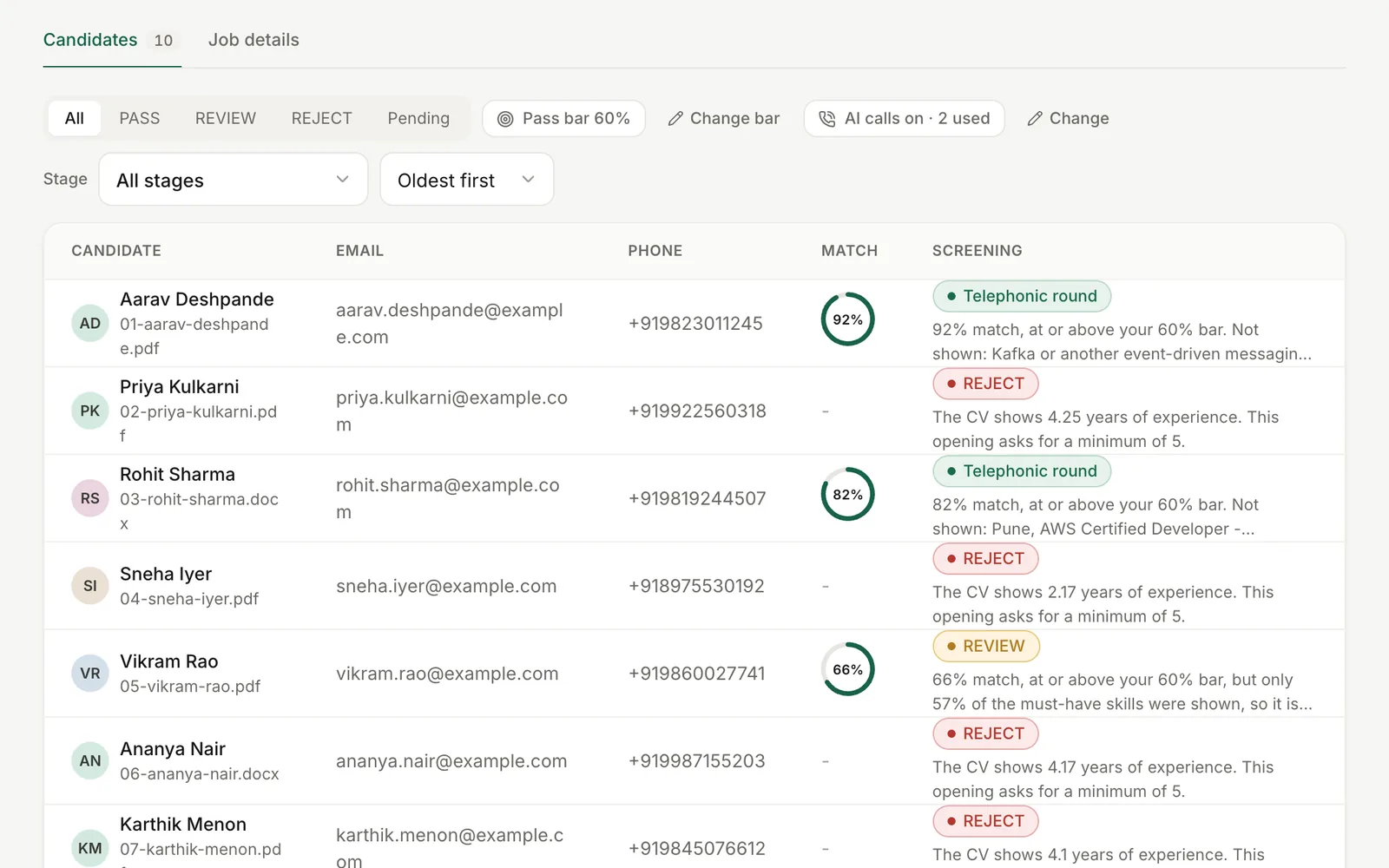
See how bulk resume screening works for high-volume hiring.